


Reducing the carbon footprint in eCommerce shipping is no longer optional – it’s a necessity for businesses looking to meet consumer expectations and address growing environmental concerns. Shipping emissions, particularly from transportation and packaging, contribute significantly to global pollution. Here’s how businesses can take action:
- Eco-Friendly Packaging: Use recycled materials, reduce packaging size, and explore reusable options to cut waste and emissions.
- Low-Emission Transportation: Transition to electric vehicles, hybrids, cargo bikes, or alternative delivery methods like neighborhood pickup points.
- Route Optimization: Leverage software to minimize fuel use, reduce idle time, and consolidate shipments.
- Carbon Offsetting: Invest in projects like reforestation or renewable energy to balance unavoidable emissions.
- Green Partnerships: Collaborate with logistics providers prioritizing low-carbon fuels and emissions tracking.
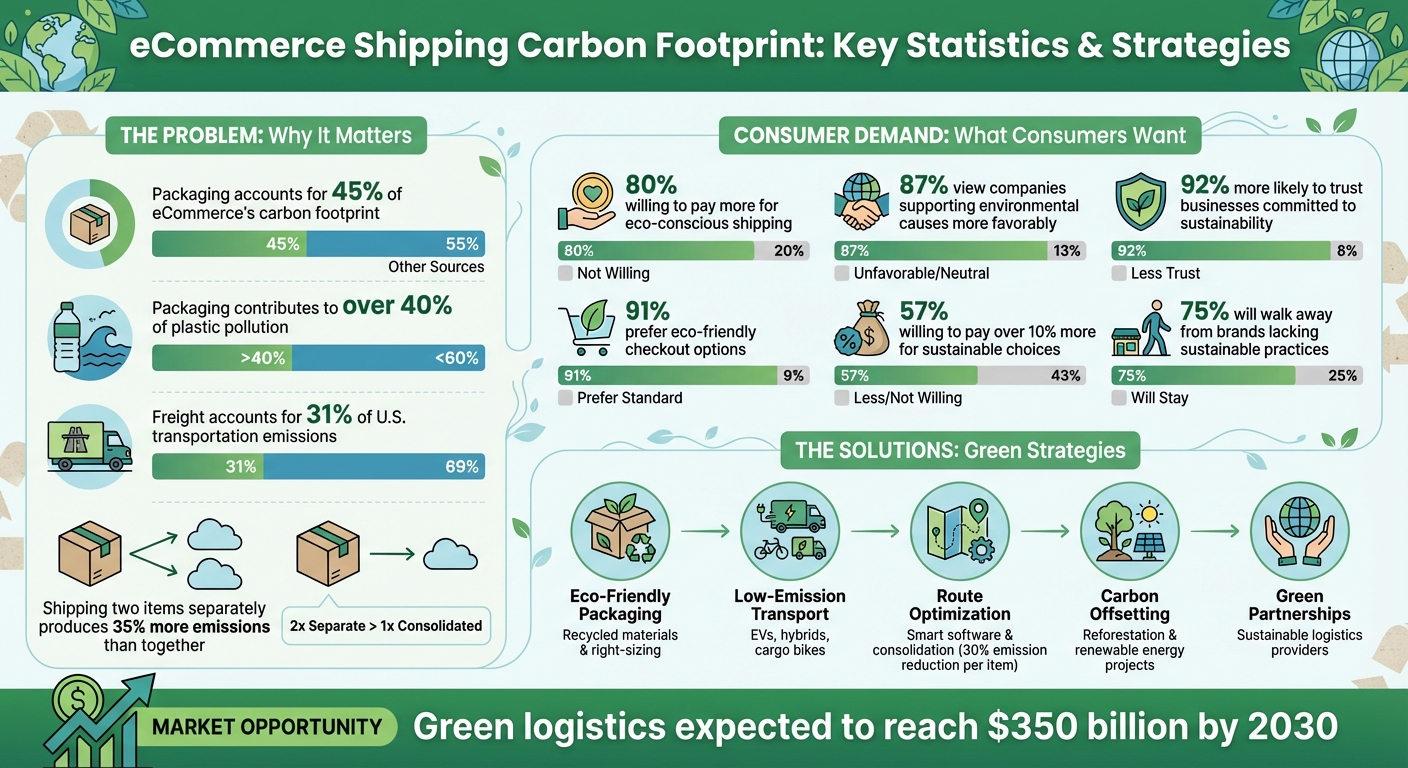
Consumers are demanding greener practices, with 80% willing to pay more for eco-conscious shipping. By implementing these strategies, businesses can reduce costs, improve efficiency, and align with customer values – all while contributing to a cleaner planet.
eCommerce Shipping Carbon Footprint Reduction Statistics and Strategies
How AI, Consolidated Shipping, And Robotics Reduce Emissions and Costs
Eco-Friendly Packaging Solutions
Packaging accounts for 45% of e-commerce’s carbon footprint. Shipping boxes alone dominate packaging waste, and packaging contributes to over 40% of plastic pollution. By carefully selecting materials and optimizing package sizes, you can significantly cut waste and emissions. Here are three practical strategies to make packaging more sustainable.
Use Recycled and Biodegradable Materials
Switching to recycled, compostable, and biodegradable materials can greatly reduce waste and minimize the harm caused by conventional packaging. Options like recycled cardboard, recycled polyethylene terephthalate (rPET), paper-based alternatives, plant-derived materials, and fiber-based mailers offer effective replacements for plastic packaging and bubble wrap.
However, not all eco-friendly materials are created equal. Many biodegradable and compostable options require industrial composting facilities, which are often unavailable. Without these facilities, such materials can degrade anaerobically in landfills, releasing methane, a greenhouse gas far more potent than carbon dioxide. To make a real impact, choose materials compatible with current recycling systems or explore reusable alternatives. Beyond materials, package sizing plays a key role in reducing emissions.
Reduce Packaging Size and Weight
Choosing the right size for your packaging is just as important as the materials you use. Oversized packages consume more resources, waste space during transit, and add unnecessary weight, all of which increase carbon emissions. Opting for packaging that fits products snugly helps cut down on material use, optimizes shipping efficiency, and lowers both costs and emissions.
One solution is Fit-to-Product (FtP) packaging systems, which create custom-sized corrugated cases tailored to your products. This eliminates the need for void fillers like bubble wrap or air pillows and reduces the need to stock multiple box sizes. Using lighter, more compact packaging also minimizes dimensional weight, reducing transportation emissions. For multi-item orders, consolidating items into a single package can further enhance efficiency. For a broader impact, consider incorporating reusable packaging solutions.
Add Reusable Packaging Options
Reusable packaging offers a long-term way to cut resource use and carbon emissions compared to single-use alternatives. For example, JD Logistics introduced a reusable express box in 2017 that can be used over 50 times. This initiative has been rolled out in more than 30 cities across China, with cumulative usage exceeding 16 million times.
The success of reusable packaging depends on factors like customer return rates, material durability, cleaning processes, and the carbon footprint of return logistics. It’s not a one-size-fits-all solution, so a thorough evaluation is essential to ensure it delivers more environmental benefits than single-use options. For brands that can implement them effectively, reusable options such as returnable mailers can help meet sustainability goals while also cutting long-term packaging costs.
Low-Emission Transportation Methods
Transportation plays a significant role in emissions within eCommerce shipping, particularly during last-mile delivery – the final stretch of getting a package to the customer’s doorstep. This phase is one of the most rapidly growing contributors to greenhouse gas emissions and local air pollution. Adopting low-emission vehicles and alternative delivery methods can significantly cut your carbon footprint while also offering potential cost benefits. Here’s how you can make meaningful changes.
Switch to Electric and Hybrid Vehicles
Electric vehicles (EVs) and hybrid models are excellent options for reducing emissions in your delivery operations. Compared to conventional diesel or gasoline-powered trucks, these vehicles emit far fewer greenhouse gases, especially in urban areas. Beyond their environmental perks, EVs can lower long-term costs by reducing fuel and maintenance expenses. Plus, businesses may qualify for government incentives when they make the switch.
Of course, transitioning to EVs and hybrids requires careful planning. You’ll need to account for charging infrastructure, range limitations, and initial investments. However, this shift not only aligns with the values of eco-conscious consumers but also improves air quality in the communities you serve. As a bonus, it can enhance your brand image, showing customers that you’re committed to sustainability.
Adopt Cargo Bikes and Crowd-Shipping
Electric cargo bikes are another smart choice for low-emission last-mile delivery, especially in busy urban areas. They help cut emissions, reduce traffic congestion, and improve delivery efficiency for short distances.
Another effective strategy is crowd-shipping or using neighborhood pickup points. Crowd-shipping involves partnering with local couriers, while pickup points allow customers to retrieve packages from centralized locations. Both approaches reduce the number of individual delivery trips and the "empty miles" that come with them. These methods contribute to a greener, more efficient delivery system, making last-mile logistics more sustainable for everyone involved.
sbb-itb-0d018d1
Route and Operations Optimization
Focusing on smarter processes and technology can make a big difference in cutting shipping emissions, lowering fuel use, and saving money. By rethinking how packages move from the warehouse to the customer, you can significantly reduce your environmental impact.
Use Route Optimization Software
Route optimization software takes the guesswork out of planning. These tools analyze traffic, delivery schedules, and vehicle capacity to design the most fuel-efficient routes. They help reduce idle time, eliminate unnecessary miles, and cut emissions.
As ePost Global Shipping explains:
Idle trucks and suboptimal routing contribute to more of your carbon footprint than most people realize.
With route optimization, you can avoid these inefficiencies by relying on data-driven decisions. Features like back-haul matching and multiday routing ensure vehicles carry maximum loads. Without these improvements, your fleet might be 10% to 30% larger than necessary, wasting both fuel and money.
Optimized routing also helps reduce the need for last-minute air shipments, which are especially harmful to the environment. Advanced AI tools take it a step further by predicting demand more accurately. This allows for better route planning that reduces fuel consumption while keeping emissions in check. To further improve efficiency, consolidating shipments is another key strategy.
Consolidate Shipments
Grouping shipments is a simple but powerful way to cut emissions. Research shows that shipping two items separately produces 35% more emissions than shipping them together. Doubling the number of items per order and avoiding split shipments can reduce emissions per item by 30% and cut shipping costs by over 50%.
Encouraging customers to choose standard shipping instead of expedited options gives you the flexibility to combine orders heading to the same area. Placing popular products in multiple distribution centers and grouping frequently purchased items together can also help avoid split shipments. When items ship from the same location, you save on both emissions and costs.
A great example of this comes from Jet.com in 2016. Their "Smart Cart" feature adjusted prices as customers shopped, encouraging them to add items that could ship together. This strategy boosted the average basket size to nearly seven items – more than double the industry average at the time. Delaying fulfillment by a day or two to ship in bulk can also make a big difference. Beyond bundling shipments, using multiple transport methods can further improve efficiency.
Combine Multiple Transport Modes
Intermodal transportation – combining rail, ocean, and road – offers a smart way to reduce both costs and emissions. Using the most emissions-efficient mode for long distances is key. For instance, rail and ocean shipping are 7–20 times more emissions-efficient than road freight, while road is more than five times better than air freight.
One oil and gas company demonstrated this by shifting long-distance routes from trucks to diesel trains. By loading hundreds of containers onto rail instead of trucks, they cut annual emissions by around 280 kilotons – the equivalent of taking over 60,000 cars off the road each year. Trains handle the long haul efficiently, while trucks manage the shorter last-mile delivery.
Taking a broader look at your supply chain can reveal where mode switching makes sense. For long distances, prioritize rail or ocean transport, then use trucks for final delivery. By leveraging the strengths of each mode, you can significantly cut emissions on interregional freight routes.
Carbon Offsetting and Green Partnerships
Once you’ve fine-tuned your operations, it’s time to address the emissions that remain. Even with optimized routes and cleaner transport methods, some emissions are inevitable. This is where strategic partnerships and carbon offset programs come into play. By investing in environmental projects and collaborating with sustainable providers, you can counterbalance these emissions. When paired with eco-friendly packaging and low-emission transport options, offsetting initiatives round out a comprehensive sustainable shipping plan.
Work with Green Logistics Providers
Green logistics providers bring a range of tools to the table, including low-carbon fuels, carbon offset programs, and emissions calculation systems aligned with standards like the GLEC Framework, ISO 14083, or the GHG Protocol. When choosing a provider, prioritize those with clear sustainability objectives who actively invest in alternative fuels and energy-efficient facilities.
These partnerships can also help you dive deeper into your emissions data, enabling you to find the right balance of ocean, rail, air, and trucking to minimize your carbon footprint. For instance, Fjällräven reduced its ocean transportation emissions by participating in Flexport‘s sustainable marine biofuel book-and-claim program.
Raj Subramaniam, President & CEO of FedEx, underscores the critical role of sustainable practices:
"The strategy to achieve our ambitious sustainability goals shows the world how a company of our size and scale can drive global collaboration, investment, and momentum to combat climate change. Reducing emissions and helping to build a better, brighter world is critical for the future of our business, customers, communities, and planet."
Support Carbon Offset Programs
To complement your green logistics efforts, consider robust carbon offset initiatives. These programs fund environmental projects that counteract your emissions by reducing or removing greenhouse gases. Examples of such projects include reforestation, renewable energy initiatives, landfill gas capture, and methane destruction. With 23% of companies aiming for carbon neutrality by 2030 and 62% of consumers strongly advocating for action against air pollution, carbon offsetting not only addresses environmental concerns but also enhances your brand’s reputation.
Ensure the offset projects you support meet additionality standards and are certified by trustworthy organizations. Many logistics providers simplify this process by partnering with carbon credit marketplaces such as GoodShipping, CHOOOSE, Pachama, and Patch.
A great example is Koio, a luxury footwear brand, which teamed up with Route to offer eco-friendly shipping and package protection. Their partnership supports an agroforestry initiative aimed at removing carbon dioxide from the atmosphere while fostering a thriving ecosystem. While carbon-neutral shipping might come with added costs, the environmental and reputational benefits make it a worthwhile investment. Clearly communicating your carbon-neutral efforts can also help build trust and showcase your commitment.
Conclusion
Reducing your shipping-related carbon emissions isn’t just a responsible move – it’s a smart business decision. This guide has outlined strategies like eco-friendly packaging, low-emission transportation, route optimization, and green partnerships, all of which help cut emissions while boosting efficiency. Considering that freight accounts for 31% of U.S. transportation emissions, even small improvements can make a noticeable difference.
The numbers speak for themselves. 87% of consumers view companies supporting environmental causes more favorably, and 92% are more likely to trust businesses committed to sustainability. Beyond enhancing your brand’s reputation, these practices can lead to real cost savings – think reduced packaging expenses, better route planning, and fewer, more efficient shipments. These steps don’t just reduce your environmental impact; they improve your bottom line.
Getting started doesn’t have to be overwhelming. Begin with simple changes like using recycled materials for packaging, collaborating with eco-conscious logistics providers, or implementing route optimization tools. Even small tweaks can make a big difference in an industry of this scale.
The demand for green logistics is expected to hit $350 billion by 2030, and 75% of consumers are willing to walk away from brands that lack sustainable practices. Additionally, 91% of customers prefer eco-friendly checkout options, with 57% willing to pay over 10% more for sustainable choices. Early movers in this space gain a clear edge, both in customer loyalty and market positioning.
FAQs
What are the best eco-friendly packaging options for eCommerce businesses?
For eCommerce businesses aiming to lessen their environmental footprint, eco-conscious packaging options are worth exploring. Choices like compostable mailers, bioplastics, recycled corrugated cardboard, or natural materials such as jute and cotton are excellent alternatives. These materials break down naturally, reducing waste and promoting sustainability.
Another effective approach is using lightweight packaging, which helps cut down on shipping emissions. Pair this with reusable or recyclable materials to further reduce your impact. These decisions not only shrink your shipping-related carbon footprint but also resonate with environmentally aware customers.
What are some affordable ways small businesses can switch to eco-friendly shipping methods?
Small businesses have several ways to make greener shipping practices more budget-friendly. For instance, combining shipments can lower both transportation costs and emissions by reducing the number of trips needed. Using technology to fine-tune delivery routes can also help save fuel and decrease carbon output. Another option is to work with carriers that use electric or hybrid vehicles or to establish temporary warehouses closer to customers, which can significantly cut down on last-mile emissions.
On top of that, switching to sustainable packaging options can help reduce waste without breaking the bank. Offering customers the choice to offset carbon emissions during checkout is another practical step. These small adjustments can go a long way in shrinking a business’s environmental footprint while keeping costs manageable.
How do carbon offset programs help reduce shipping emissions?
Carbon offset programs are an effective way to address the carbon emissions generated by eCommerce shipping. These initiatives fund projects such as reforestation, renewable energy development, and methane capture, which help counterbalance the environmental impact of shipping activities.
For businesses, joining a carbon offset program is a step toward taking accountability for their carbon footprint. At the same time, it supports efforts that promote a cleaner and healthier environment. This method enables companies to adopt greener shipping practices while maintaining the speed and reliability their customers expect.
